


Rails for modern finance· Mainnet

Define the outcome.
Epoch does the rest.

You define the financial outcome. Epoch handles the chains and rails underneath. No blockchain expertise required.

You keep your keysPolicy before settlementOne signature, solver-filled
Outcome recordSettled

Acquire position

Ref EPX-4471-0C

Outcome
acquire
Source
Any chain, token, or fiat
Amount
$0.00
Policy
KYC · Sanctions
Destination
USDC on Base
4 chains → 1 outcome
1 signature
Mainnet · live

Institutional scale,

Zero operational overhead

One
API for every chain and rail
One
signature, start to finish
Zero
internal Web3 engineering

One API call.One outcome.Chains underneath execute it.

§ 01Why this is hard

Onchain builds are slow, costly, and rigid

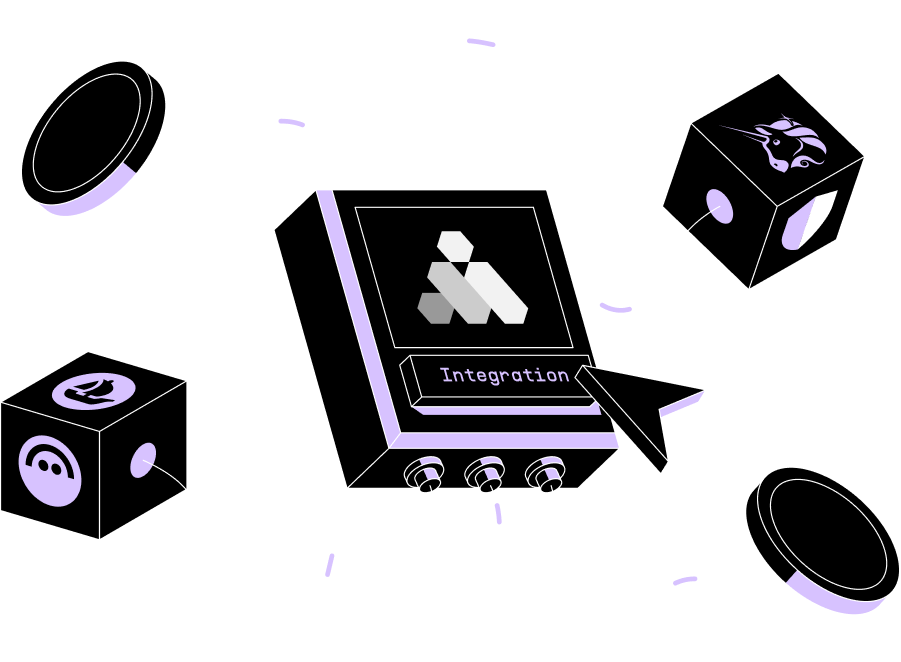
Isometric diagram of an Integration hub connected to protocols and assets across winding rails
01

Fragmented liquidity and rails

Assets and protocols sit on networks that don't connect.

02

Costly integrations

Each new network means months of engineering overhead.

03

Vendor lock-in

One provider limits how you scale, switch, or adapt.

§ 02For institutions & product teams

Why build on Epoch

Scale across Web3 without scaling ops or engineering.

01
UX

One-click UX

Routing, bridging, and execution happen behind one action.

02
Institutional

Built for institutions

Banks, fintechs, and funds ship without a Web3 team.

03
Integration

One API

Skip assembling bridges, DEXs, and ops tooling yourself.

04
Operations

We own the dependencies

Bridges, venues, and oracles sit behind our SLA, not yours. We take care of everything for you.

§ 03The product

An API for outcomes, not plumbing

You state the outcome. Epoch routes, executes, and reports back. Complexity stays on our side.

  • InAny chain, any token, or fiat.
  • RunRouting, bridging, swaps and policy. Handled.
  • OutOne verified outcome, back to your systems.
ETHBASEARBSOLAVAXFIAT
OUTCOME
§ 04Compose

Pick capabilities. Epoch composes the outcome.

Toggle what you need. One API—no extra services to maintain.

Full API reference
request.tsPOST /v1/solve
await epoch.solve({
  outcome: "acquire",
  from: "any", // any chain, token, or fiat
  steps: [
    "bridge",
    "swap",
    "compliance",
  ],
});
§ 05How it works

Intent to settlement, one integration

Step 01 · Define
Code intent feeding into Epoch's integration hub to define the outcome
Step 02 · Coordinate
Handshake over Epoch's execution layer as paths are coordinated across rails
Step 03 · Settle
Synced systems confirming settlement after Epoch reports the verified result

Step 1 · 01

Define the outcome

One API call states the asset, destination, position or full sequence you need.

Step 2 · 02

Epoch coordinates execution

Epoch finds the optimal path and orchestrates the routing, bridging, swaps, and protocol calls across chains on your behalf.

Step 3 · 03

Settlement and confirmation

Outcome settles onchain; verified status returns to your systems.

§ 06Build

Three ways in, one execution layer

Integrate at the level that suits your team. All three resolve to the same coordination layer underneath.

01

Widget

Embedded widget. The fastest path to accepting inbound from any chain, token or fiat.

02

Flows SDK

Compose multi step outcomes inside your own product surface, with your own UI.

03

Intents SDK & API

State the outcome directly and let Epoch coordinate solvers and settlement.

§ 07Security & custody

Answers your risk team asks first

You keep the keys. We orchestrate execution—we never hold your assets.

Custody model
01

You hold the keys

Epoch never holds keys or discretionary control of balances.

02

Scoped, expiring execution

Approvals cover one outcome and expire. No standing allowances.

03

Defined failure behaviour

If a leg fails, the flow stops in a known state. Funds are returned to the originating account or held recoverable, never left in transit, and the terminal state is reported to your systems.

Assurance

Diligence reference

Custody model
You keep your keys. Client keys remain client-side. Assets transit Epoch settlement contracts only within an authorised flow and are never held on your behalf outside one.
Execution model
Outcomes settled by competing coordinated solvers, not one privileged executor. Epoch sources execution and verifies the result.
Policy enforcement
Screening and policy block before execution. Failed checks halt the outcome.
Contracting entity
Sync Tech LLC.
Regulatory position
Epoch is execution infrastructure. Licensing, onboarding, and reporting stay with you.
Security contact
Vulnerability reports and diligence questionnaires: [email protected]
Security pack
Architecture, threat model, and audits available under NDA. Request it.
§ 08Compliance & privacy

Controls run before value moves

Screening and policy gate the outcome. If a check fails, nothing executes.

Epoch doesn't replace your licences or obligations, it runs your policy inside the execution path.

01

Screening before execution

KYC, sanctions, and policy block before any leg runs. Failed checks halt the outcome; every decision hits your audit trail.

02

Privacy when you need it

Via Miden, route to private, verifiable settlement—confidential details, still verifiable.

In partnership with Miden
§ 09Use cases

One integration, many financial products

Enter, exit, move collateral, and rebalance across chains via one API—with policy in the flow.

§ 10Coverage

Chains supported out of the box

Eight networks live on mainnet. Venue and bridge coverage stays on our side. Same interface on testnets.

EthereumLive
BaseLive
ArbitrumLive
OptimismLive
PolygonLive
AvalancheLive
BNB ChainLive
SolanaLive

New networks and protocols land on our side—no work on yours.

  • EthereumLive
  • BaseLive
  • ArbitrumLive
  • OptimismLive
  • PolygonLive
  • AvalancheLive
  • BNB ChainLive
  • SolanaLive
§ 12FAQ

Questions every team asks first

Same facts as security and compliance. Nothing here is marketing.

You do. Epoch never holds your signing keys and never takes discretionary control of your balances. Authorisation originates from your infrastructure for every outcome, and assets transit Epoch settlement contracts only inside an authorised flow.

The flow stops in a known state. Funds are returned to the originating account or held recoverable, never left in transit, and the terminal state is reported to your systems so you can act on it.

One integration. Choose an embedded widget, the Flows SDK for your own UI, or the Intents SDK and API. None of the three require an internal Web3 team, and all resolve to the same execution layer underneath.

Eight networks are live on mainnet today: Ethereum, Base, Arbitrum, Optimism, Polygon, Avalanche, BNB Chain, and Solana. New networks are added on our side, with no integration work on yours.

KYC, sanctions and your own policy rules are evaluated as blocking conditions before any leg executes. A failed check halts the outcome rather than flagging it after the fact, and every decision is returned to your systems for your audit trail.

Banks, payments providers, fintechs, neobanks, hedge funds, and product teams that want onchain outcomes without building a crypto desk. If your organisation already operates compliance controls, Epoch gives them a place to run inside the execution path.

Outcomes are settled by coordinated solvers competing to fill your intent, not by a single privileged executor. Epoch decomposes the intent, sources execution, and verifies the result against what you asked for.

Yes. Through our partnership with Miden, Epoch can route to private, verifiable settlement, keeping sensitive transaction details confidential while remaining verifiable.

The full API reference lives at https://docs.epochprotocol.xyz. If you would rather see the product working, a live application built on Epoch runs at https://www.kismet.today/.

No. Epoch provides execution infrastructure and is not a bank, broker, money transmitter, or investment adviser. Licensing, customer onboarding and reporting obligations remain with you.

Talk to us

Define your first outcome with Epoch

Book a call with our team, or dive straight into the documentation to see how the API works.